
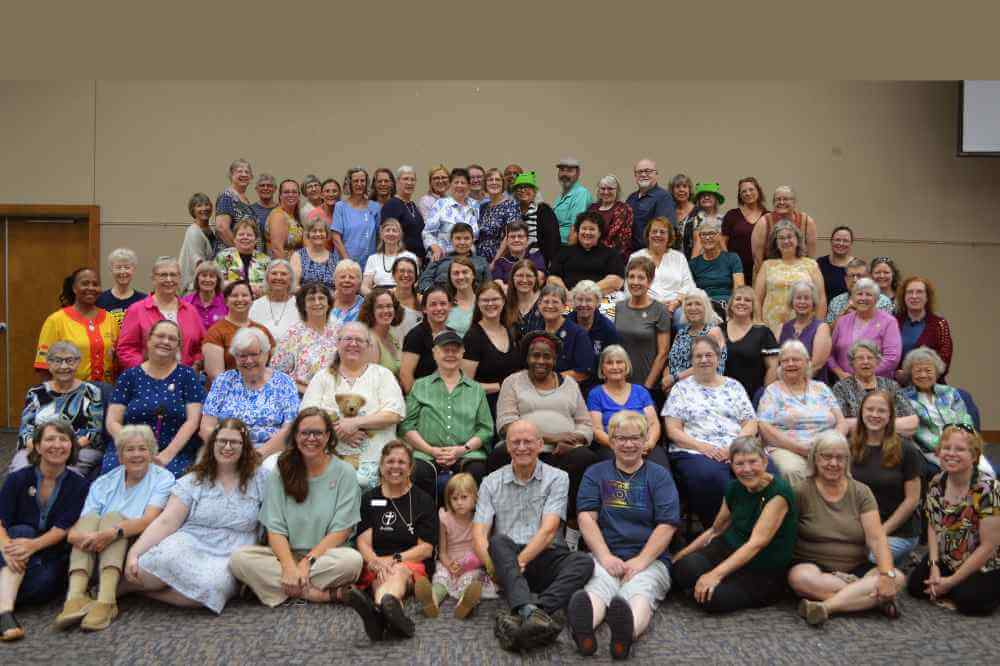
Lutheran Deaconess Conference Meets in NC
Aug 17, 2026 | Stories of Ministry
The Lutheran Deaconess Conference (LDC) gathered for their Annual Meeting, August 6-10; their first time meeting in North Carolina.
Spartan Mosaic
For many people, college memories include late-night study sessions, new friendships, and the excitement of new independence. But for some of today’s students, that experience looks very different.
“Students are living in a world that looks nothing like the college experience that I knew, even 20 years ago,” says Andrew Mails-Saine, campus minister of Spartan Mosaic(opens in new tab), the campus ministry program at UNC Greensboro that the North Carolina Synod, ELCA, shares with the United Methodist Church (UMC). “At any given time on our campus, about a quarter of our students are worried about where their next meal is coming from.”
Food insecurity is not a new concern at UNC Greensboro, or at Spartan Mosaic. In 2009, the campus ministry began a small food pantry to serve students experiencing hunger. Over the years, the need grew and so did the ministry, eventually developing a partnership with UNCG’s Division of Student Affairs.
Today, Spartan Open Pantry (SOP) has become a national example of effective collaboration between a campus nonprofit and a university to support students and staff experiencing food insecurity. During the 2025–26 academic year, the pantry distributed 93,000 pounds of food, along with thousands of hot meals.
And behind those numbers are students whose experiences show just how much the pantry can mean.
“Before I used the pantry, I had to choose between books and food,” one student shared. “I don’t think I could’ve stayed in school without help.”
Another student described the difficult choices hunger had forced on their family: “I was sometimes not eating so that (my siblings) could have a meal. I am happy the pantry is here.”
For Minister Mails-Saine, this ministry is about more than meeting an immediate physical need. “People we serve know that here they experience an unconditional love, imperfect as it may be. We give without expectation. It is transformative.”
The spirit of welcome and generosity has also shaped the way students connect to the campus ministry of Spartan Mosaic.
“Our students are getting connected through radical hospitality and service work,” Mails-Saine says. “It has been a means for us to create beloved community. Radically.”
Sometimes, that experience of being cared for becomes an opportunity to care for others. One student who received food from the pantry now volunteers with the program, reflecting, “It meant a lot to me that people cared when I didn’t have enough, so now I am trying to pay that back.”
The work of Spartan Open Pantry recently became part of a larger story about the growing problem of food insecurity on college campuses. The pantry is featured in Learning Hungry(opens in new tab), a new 30-minute documentary exploring how colleges, churches, and nonprofits are responding to the crisis of college hunger.
The documentary, produced by Working Hungry, is designed not simply to be watched but to spark meaningful conversation and action. It will be available for free streaming and on PBS beginning September 1.
The timing is especially appropriate as students return to college campuses this fall. The hunger crisis on college campuses, Mails-Saine says, “is not something that’s going away.”
Learning Hungry offers an opportunity to begin asking what hunger looks like in your own community. Screening micro-grants of $250 are available to churches and campus ministries that would like to host a screening and provide a meal or discussion materials. Minister Mails-Saine shares his hope: “Perhaps watching and discussing the documentary might impassion congregations to look to 2-year and 4-year colleges near them to ask about food insecurity there and see how they might help.”
The film’s trailer, information about hosting a screening, and applications for screening grants are available through the Working Hungry website.
The ministry behind Spartan Open Pantry is also beginning a new chapter. Formerly known as Wesley-Luther, the campus ministry has transitioned to Spartan Mosaic, reflecting its ongoing partnership between the UMC and the ELCA.
While the name may be new, the ministry’s commitment to UNC Greensboro students is not. Spartan Mosaic has served the university for more than 100 years. What began as a small food pantry in 2009 has grown into a significant ministry of nourishment, partnership, and community.
And for Minister Mails-Saine, that ministry is ultimately an expression of faith. “This ministry ignites some passion inside students who are asking why they should stay in the church,” he says. “Our faith leads us to transform lives. This is what following Jesus is like.”
As students head back to campuses across North Carolina and beyond, Spartan Mosaic’s ministry offers a reminder that hunger is not an abstract problem and that congregations and campus ministries have a role to play in responding.
Sometimes that’s as simple as making sure a student has enough to eat.
Spartan Mosaic is just one of thirteen campus ministries connected to and supported by the North Carolina Synod. This synod has a long-standing history of nurturing youth and young adults, including through campus ministries. Your Mission Support dollars are critical. Thank you for your generosity!
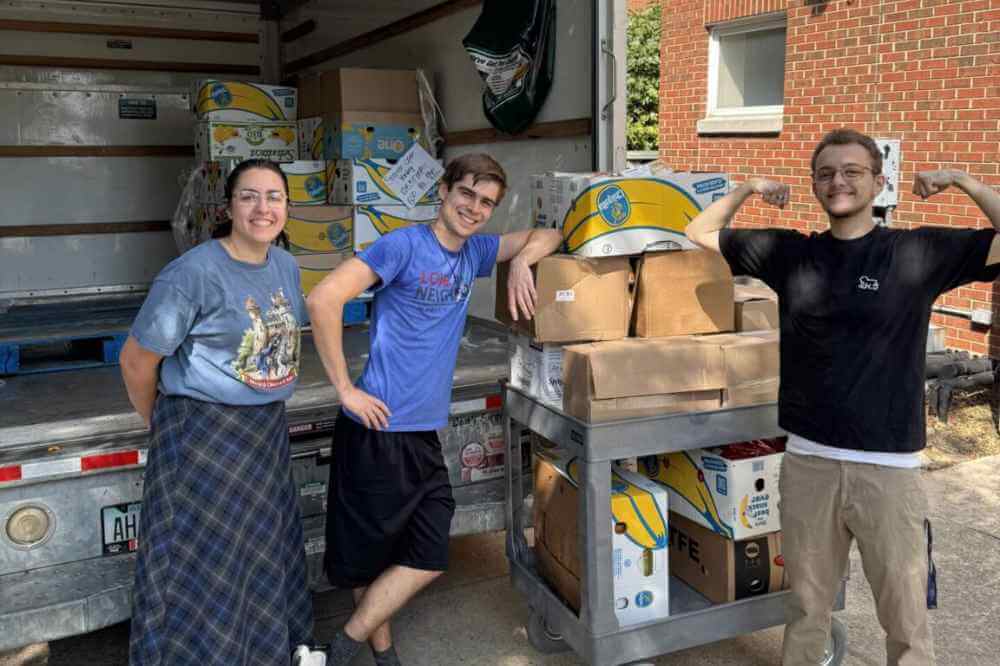
Spartan Mosaic(opens in new tab)
Learning Hungry(opens in new tab) (Working Hungry website; scroll to see Learning Hungry links)